Comparing Pressure Washing vs Soft Washing: What’s Best for Your Perth & WA Home
15min read
Comparing Pressure Washing vs Soft Washing: What’s Best for Your Perth & WA Home
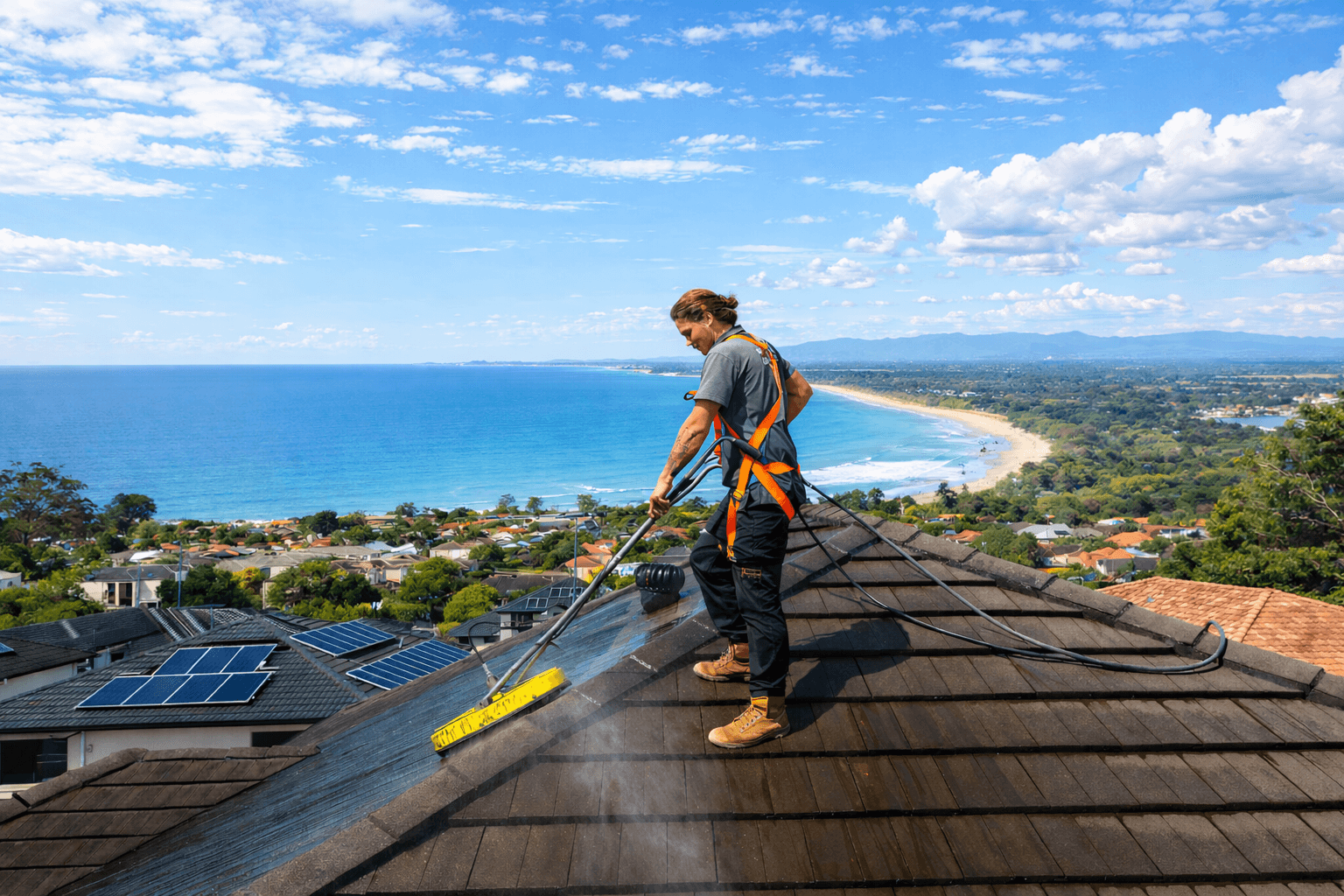
When it comes to exterior cleaning in Perth and across Western Australia, knowing whether to use pressure washing or soft washing can make all the difference for your surfaces, safety, and long-term results. These two methods look similar at a glance, but their mechanics, ideal use cases, and impacts on your property vary widely. Understanding the difference helps you choose the right method and avoid costly damage.
What Is Pressure Washing?
Pressure washing (sometimes called power washing) uses high-pressure water to blast away dirt, stains, grime, mould and other contaminants. It’s extremely effective at removing tough build-up from hard, durable surfaces like concrete driveways, brick patios or paved areas.
Key characteristics:
Uses high water pressure (typically 1,500–3,000+ PSI)
Excellent for concrete, stone, brick and hardscapes
Fast cleaning and visible results
When pressure washing works well in WA:
Driveways and garage floors
Pathways and pool decks
Concrete patios
Hard exterior walls
Risks of using pressure washing incorrectly:
Can damage roof tiles, paint and render
May force water into cracks and cause moisture issues
Not ideal for surfaces that are delicate or painted
For these reasons, pressure washing isn’t always the safest choice for roofs, window frames, or softer surfaces.
What Is Soft Washing?
Soft washing uses low-pressure water (often under 500 PSI) together with specialised cleaning solutions to kill mould, algae, mildew, moss and other organic contaminants at the source. It relies more on chemistry than brute force.
Key characteristics:
Uses low pressure + cleaning agents to break down organic growth
Ideal for delicate or sensitive surfaces
Cleaning results last longer by treating the root cause
Best uses for soft washing in Perth & WA:
Roofs (terracotta, tile, Colorbond and metal)
Painted walls and rendered surfaces
Timber or soft exterior cladding
Gutters, fascias and soffits
Soft washing doesn’t rely solely on pressure, which makes it a much safer option for roofs and exterior walls — it targets the biological growth (like moss and algae) that causes the most problems in WA’s climate.
How the Two Methods Compare
Feature | Pressure Washing | Soft Washing |
Pressure | High (1,500+ PSI) | Low (<500 PSI) |
Best for | Hard, durable surfaces | Delicate, painted or organic-affected surfaces |
Organic growth removal | Surface only | Root-level removal |
Damage risk | Higher on soft surfaces | Lower risk |
Longevity | Shorter-term results | Results last longer |
Soft washing often results in a cleaner surface for longer because it eliminates the spores that cause regrowth — something pressure washing can struggle with.
Surface-Specific Recommendations for Perth Homes
✔ Roofs
Soft washing is the recommended method for virtually all roof types in Perth — from terracotta tiles to Colorbond steel — because it reduces the risk of cracking, paint loss or forcing water under tiles.
✔ Driveways, Paved Areas & Concrete
Pressure washing excels here: the tough surface can withstand higher pressure and responds quickly to forceful cleaning.
✔ Painted Walls & Cladding
Painted surfaces can be stripped or damaged by pressure washing. Soft washing gently removes organic growth without harming the finish.
✔ Fences & Outdoor Furniture
For timber, ornamental features and fences, soft washing helps avoid splintering and surface abrasion while still cleaning effectively.
Should You DIY or Hire a Professional?
Both pressure washing and soft washing require skill to reach the best results and avoid damage. Professionals:
Know which method suits which surface
Use commercial-grade equipment and correct chemical mixes
Have safety equipment for working at height or on slippery surfaces
Especially in Perth’s climate, where intense sun and sudden rain can affect cleaning outcomes, a professional assessment ensures the right method and safer results every time.
Final Thoughts: Which Is Best?
There’s no one-size-fits-all answer.
The best choice depends on the surface and cleaning goals:
Choose pressure washing for hard, durable surfaces where blasting away grime is needed.
Choose soft washing for roofs, painted walls and delicate surfaces to avoid damage and enjoy longer-lasting results.
Often the smartest solution is a combined approach: pressure wash hard areas like driveways, and soft wash sensitive areas like roofs and cladding. If you’re unsure which is right for your home, a local professional can help guide the best choice.